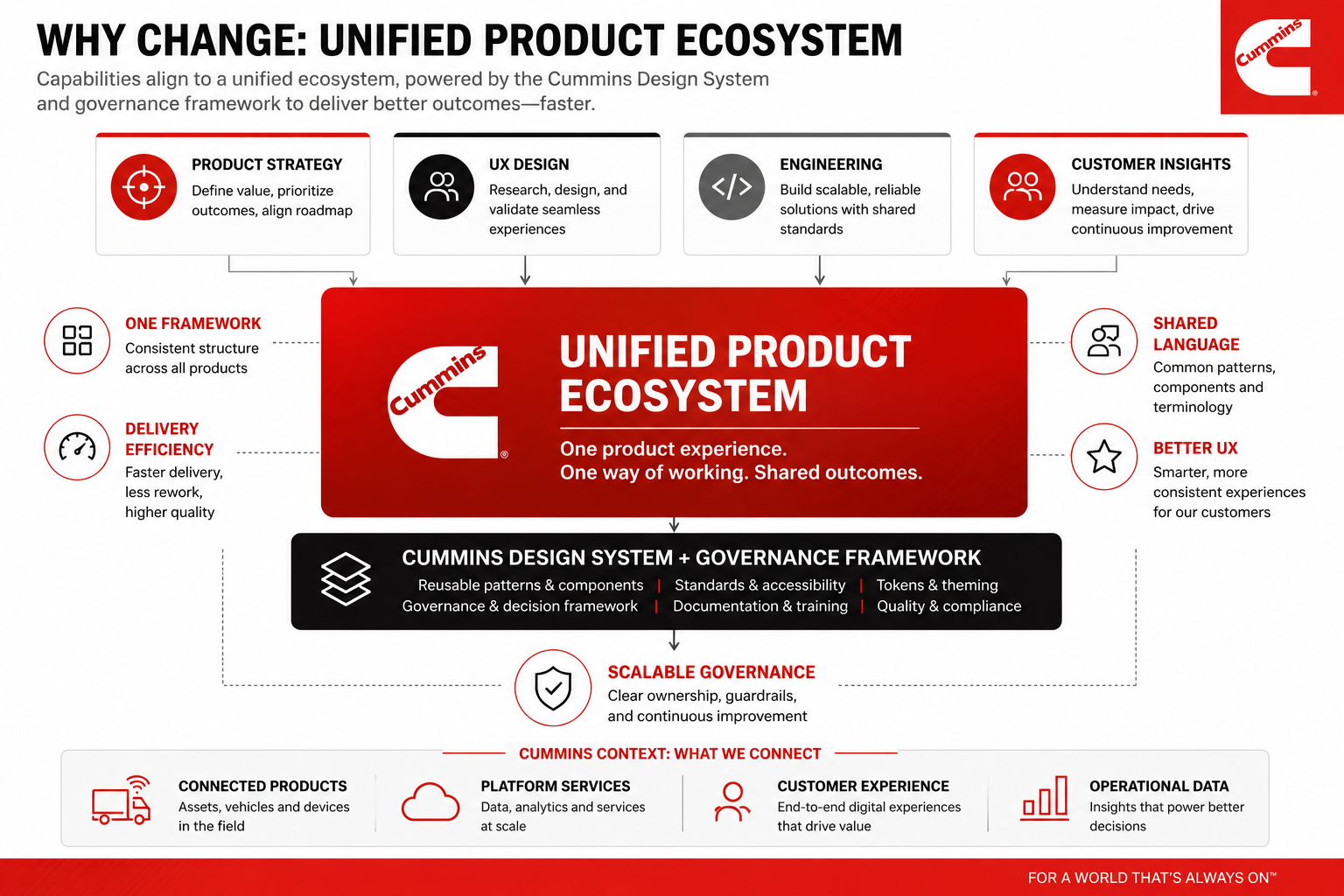
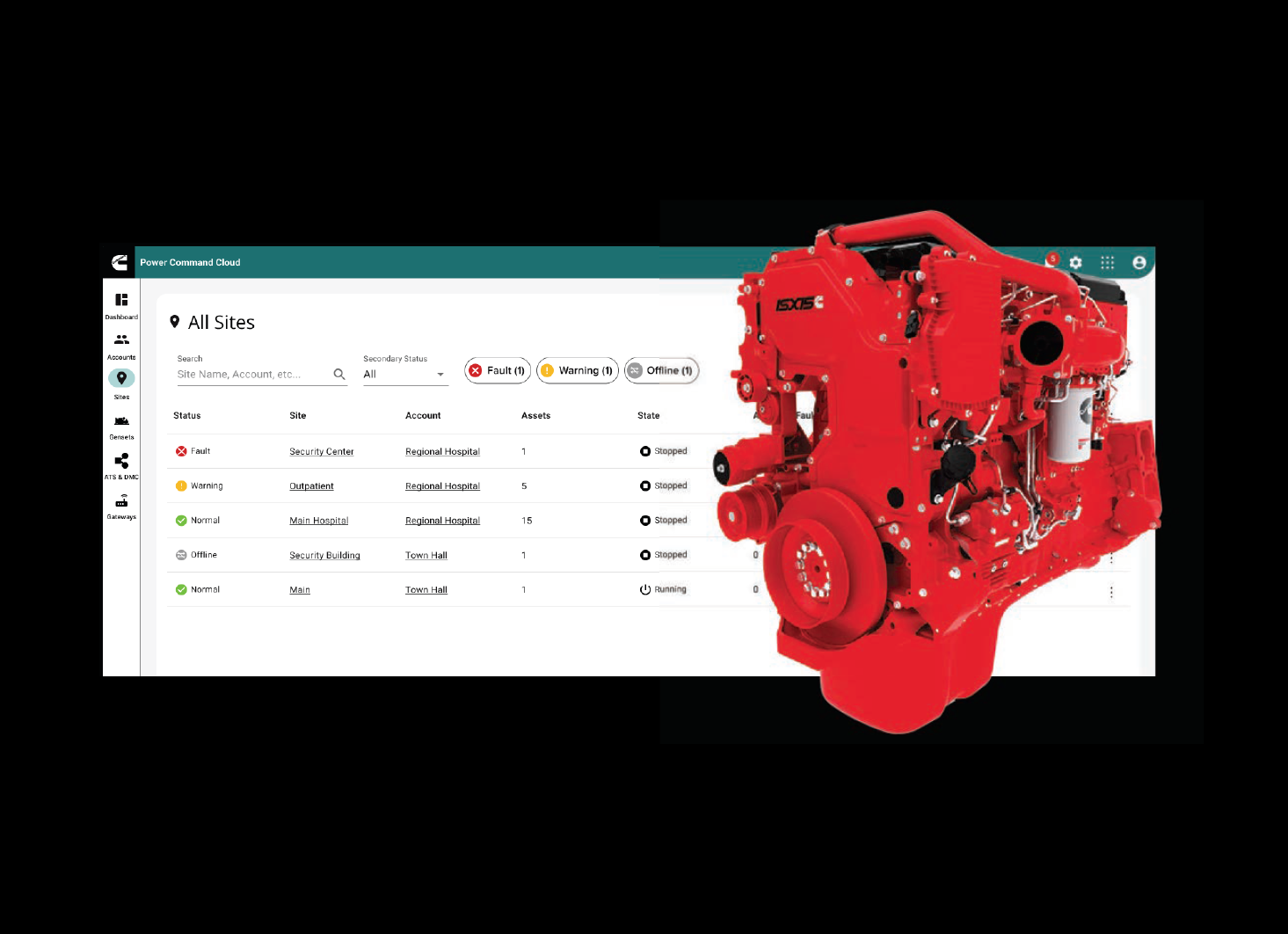
This case is summarized here:
Cummins Product Design Consulting (Acrobat)
Cummins Product Design Consulting (Acrobat)
Rebuilt operating model and design system foundation
Cummins was moving toward a more mature, unified product organization, but its digital ecosystem was fragmented across teams, priorities, and delivery models. The engagement re-centered design at the right point in intake and planning, then translated it into delivery standards: a Cummins-specific design system that scaled across teams, a stronger working rhythm across product/UX/engineering, and governance that made alignment enforceable. This built internal capability—process, muscle memory, and tools—so the gains lasted after the consulting team stepped back.
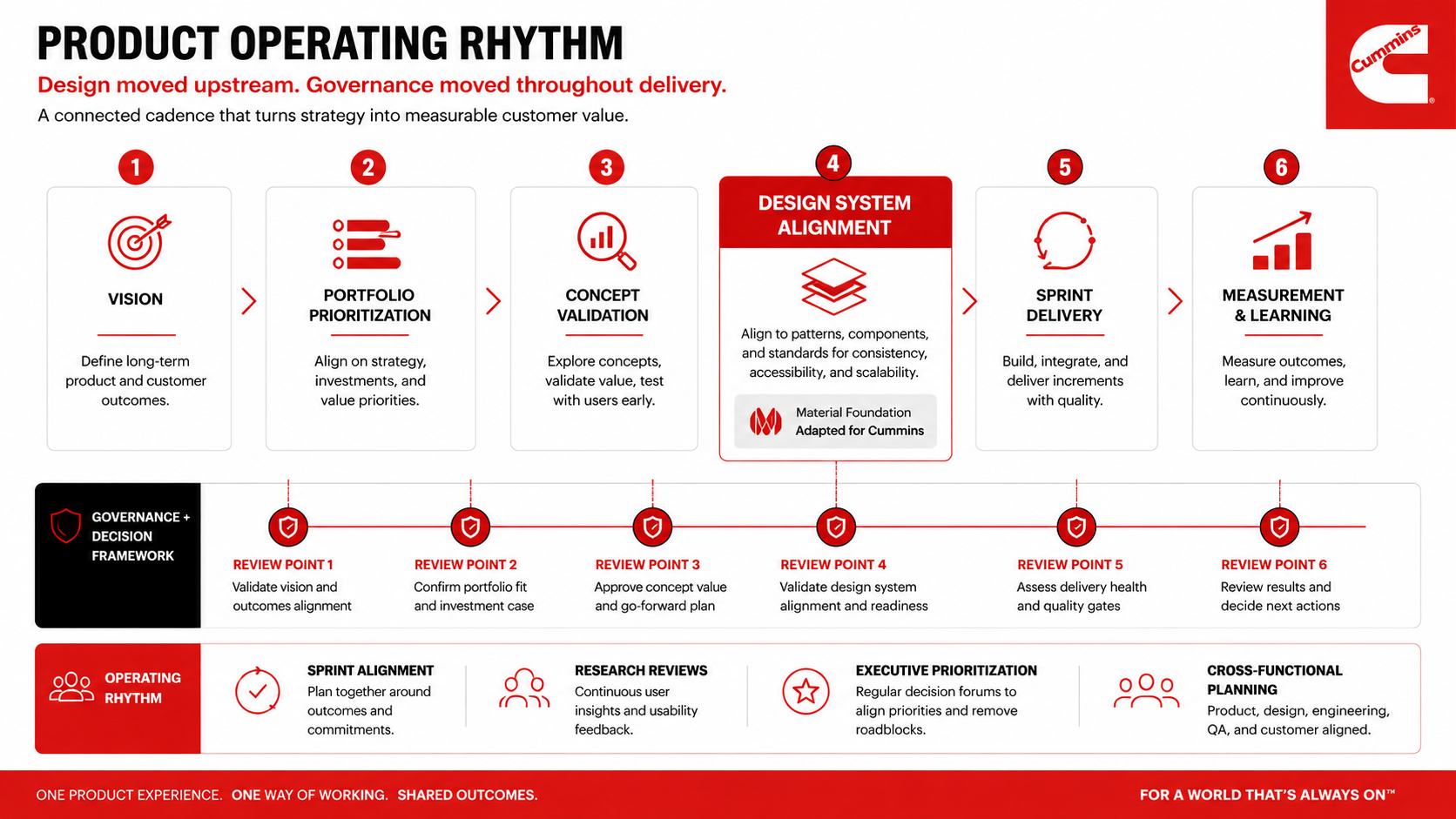
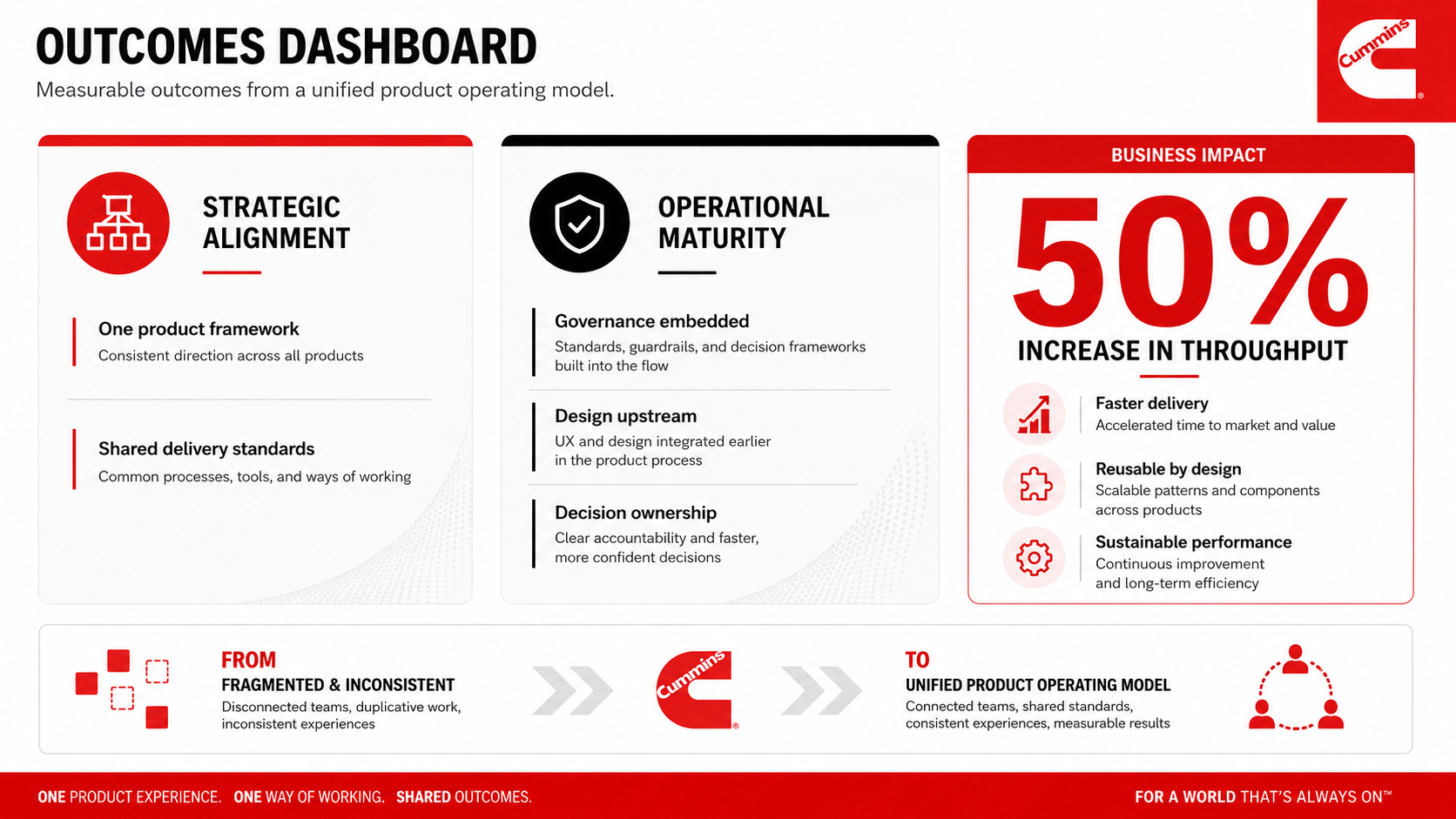
Operating rhythm + measurable throughput improvements
By making work visible and decisions explicit, the team increased throughput by ~50% across the workstream. Prioritization conversations became executive-level and portfolio-informed, rather than downstream debates. The operating rhythm included sprint alignment rituals, research practices tied to decision-making, and governance guardrails that reduced surprises, improved consistency, and created a durable foundation for long-term UX maturity.