P&G PRODUCTIONS / DAYTIME DOLLARS
Giving soap fans a part to play
I designed Daytime Dollars to give soap fans a real part to play. My goal was to carry the drama from playful interactive ads into a daily loop of email, television, and prizes. P&G Productions needed to lift ratings and deepen engagement for Guiding Light and As the World Turns, and my creative vision was directly connected to those goals. By bringing fans into the action, I wanted to make our audience more invested in the shows, supporting steady viewership and stronger relationships with both properties.
Fans could give a character a virtual slap from inside an ad, wipe steam from a shower scene, and send a little daytime drama to a friend. We brought the pleasures of Guiding Light and As the World Turns into an interactive world with a direct invitation: register, watch, and win.

This was one of my most creative assignments at Arc Worldwide and a relationship I valued. I led digital content and creative strategy, staying with the work from pitch through launch. One leadership challenge: bringing together people from different P&G business units and agency partners, each with their own priorities. I kept the team working together by focusing on clear communication, shared goals early on, and practical problem-solving.
A daily escape, with something at stake
P&G Productions wanted occasional viewers to watch more often and feel more connected to both shows. The challenge: increase ratings and connect television viewers with online participants.
We started with a simple insight: soap operas were an escape. Viewers entered a world of outsized emotions, complicated relationships, and characters they knew intimately. I wanted the promotion to feel like an extension of that pleasure, connected to weekday cash prizes and experiences with the stars and the world around the shows.
I made the invitation and the viewing experience part of the same experience. Watch and Win brought the ads, daily emails, telecasts, and prize claims together so each part supported the others.
I worked with creative directors from P&G's shopper and health and beauty teams, bringing a digital perspective into a shared creative process. We shaped the program together and earned P&G's support. Our team won the assignment in a competitive pitch and moved quickly into production. I stayed with the work as the idea became the advertising, the content, and the participation experience.

The ad was a small piece of the show.
The rich-media work embraced soap opera's wonderfully excessive vocabulary. One idea let people deliver a virtual slap to a character. Another put a soap star behind a steamy shower screen and let the viewer wipe it clear. The interaction carried the joke. A cursor became a way to participate in the fantasy.
Those ideas belonged in places where fans were already spending time with the shows. The ads appeared alongside Guiding Light content on TV.com and AOL Television, with recognizable characters giving people an immediate reason to engage. Registration and sharing were built into the experience so that curiosity could lead naturally into the program.
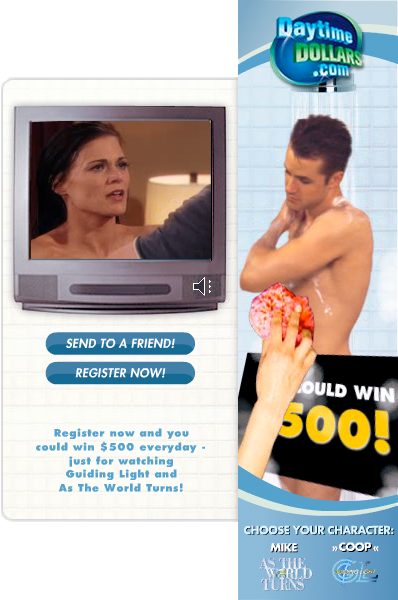
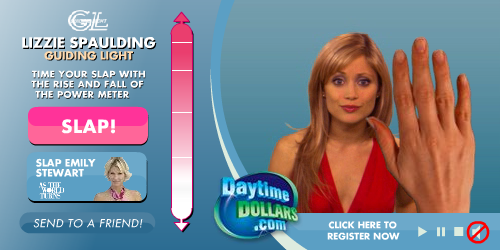

I drove the digital content approach and its execution, working with a wider creative team that included designers Bob Bjarke and Julie Adams. Together, we carried the shows' personalities through the ad, the website, and the next invitation to participate. Short television spots extended the invitation on air.
Making the next step clear
Underneath the flirtation was a practical daily sequence. People registered to receive a personal code by email each weekday, then watched the shows for the winning code and the characters appearing with it. A matching code brought them back to the website to claim a prize.
I worked with ePrize to shape the sweepstakes rules around the experience we wanted, while staying within legal requirements. We considered how freebie sites and code-sharing communities might share information as soon as a program aired. Personal codes, claim windows, and questions about the show and character helped guide participation. I had to think about both the rules and the experience, including all the ways people might play.

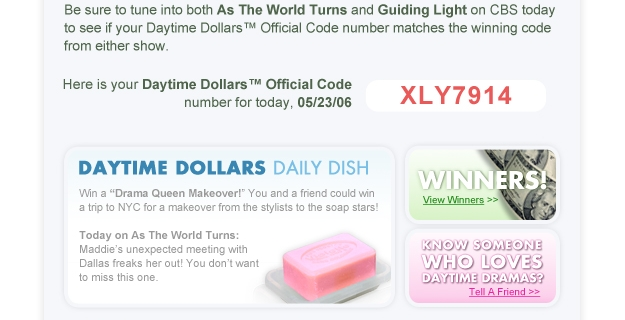
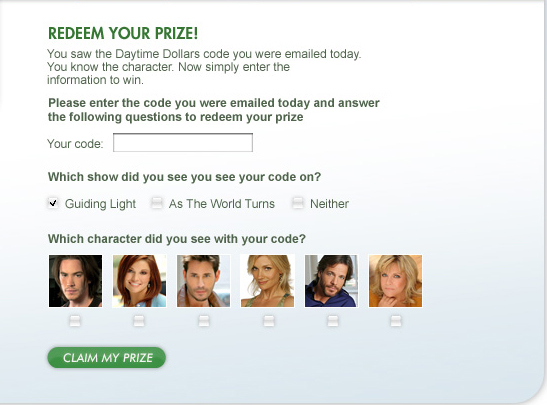
The homepage explained the experience in three steps and put the immediate tasks within reach: register, log in, and understand the game. The redemption screen asked which show the person had watched and which character appeared with the code. Those questions connected the online action to a specific moment on television, keeping the viewing relationship central to the experience.
The program also made room for returning participants. Logged-in screens recognized members. Show-specific promotions, bonus days, podcast downloads, and tell-a-friend functions gave the website useful work beyond the first registration. Sharing carried that entertainment to other fans.
The cadence followed the actual broadcast. When basketball coverage preempted both shows in March 2006, the weekday code emails paused and resumed when the shows returned. The email and television schedules worked together so people could participate.
Participation, return viewing, and recognition.
With about $1 million over a year, we needed the creative idea to work across advertising, the website, email, and the television invitation. The first Daytime Dollars prize was awarded on March 13, 2006. The agency reported more than 300,000 registrations, a 52% average email open rate, and over 26 million emails sent during the program. The agency also reported more frequent viewing and steady ratings while other programs declined. Those results showed how the program connected participation with continued viewership, supporting P&G’s goal of strengthening audience relationships during a tough time for daytime programming.
I wanted participation to lead to watching, paying attention, and coming back. The daily emails, show-and-character questions, and broadcast-timed messages were all designed for that purpose. Prizes gave people a reason to register and open the emails.
Daytime Dollars received Silver Consumer honors for Best Email Opt-in Campaign in MarketingSherpa's 2007 Email Awards. For me, that recognition reinforced the value of designing the invitation and the ongoing relationship together. The email carried something participants needed for that day's experience, connecting the entertainment idea to another reason to watch.
What I carried forward
Daytime Dollars sharpened how I think about participation design. The creative idea, the interaction, and the rules all shape the experience. Working with ePrize meant thinking through alternate paths, including how someone might approach the game differently from what we intended. I carried that habit into later UX work, paying attention to what brings someone in, what they need to understand, and what makes the next action possible.
What stays with me is the connection between the creative idea and the behavior it encouraged. The cheekiness drew people in. The program gave that attention a place to go, with a clear next step and another reason to come back when the next episode aired. I still value developing the creative platform and the experience together.