Helio | Making a Mobile Community Work Across Devices
Device UX and mobile strategy for identity, sharing and community
Helio wanted to make mobile phones a real part of people’s social lives. I led the mobile strategy and connected identity, photos, and community across the handset, Helio’s website, and MySpace. The challenge was turning a big vision into features people would actually use. Helio’s commercial service passed 100,000 subscribers in the second quarter of 2007, a year after launch. Handset photo posting to MySpace was part of its early social mobile offering.
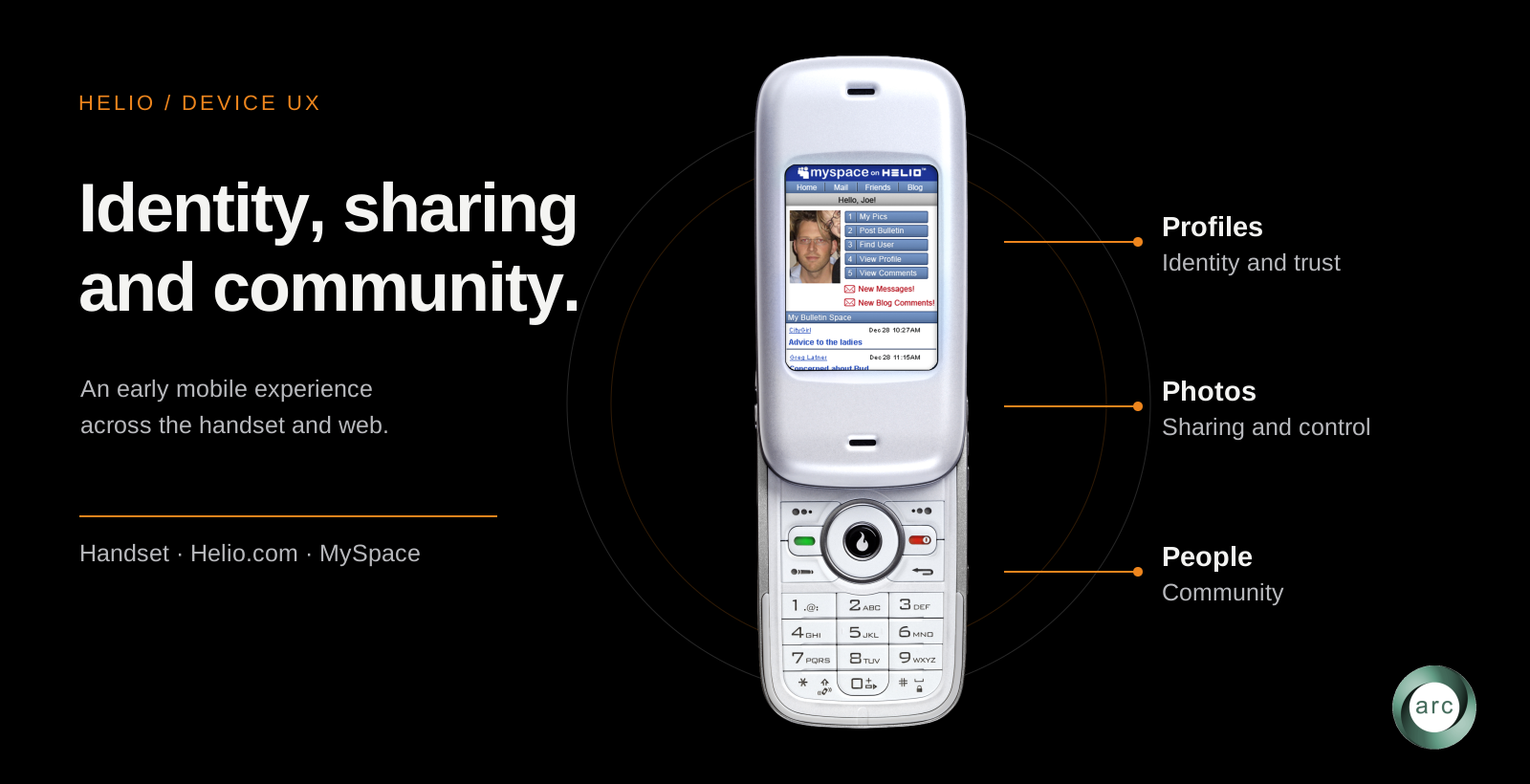
Find the everyday value in the service
Helio launched when mobile UX was still new, and companies were only beginning to see how phones could fit into daily life. The vision combined unique handsets, a mobile service, and social features. At Arc, we designed a community and media-sharing experience and worked out how Helio’s exclusive partnership with MySpace would fit in. The commercial launch was on May 2, 2006, and posting photos to MySpace from the handset became possible. The identity model and portal concepts explored how those relationships could work across the service.
Parrish Hanna, a UX pioneer and mentor, brought me onto the project to help set the vision. I led the mobile strategy, connecting the experience across the handset, web, and MySpace. My role was to turn the service idea into design principles and map user journeys for our clients, always keeping business goals in mind. Working with Parrish, I learned from his approach while making daily decisions and setting team priorities. We worked on everything from handset apps to web profiles, privacy, and trust, aiming for a consistent experience.
I focused on the everyday value within Helio’s ambitious business goals. Helping users stay connected, express themselves, and share with those who mattered most was the real test. Our team used insights from social-networking and photo-sharing services to map identity, trust, and media across Helio’s handset and web touchpoints. That work shaped the experience around people’s relationships and the choices they would make. Client discussions helped align the community strategy with Helio’s priorities.
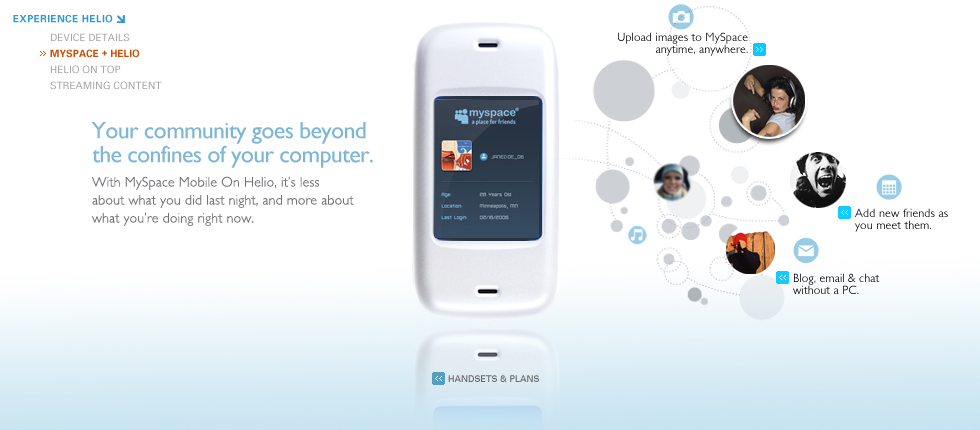
Make identity and trust part of the experience
We put people at the center of the experience. Their handset, Helio.com profile, MySpace presence, and contacts were connected parts of the experience model. I used these connections to shape the mobile strategy, making sure the real value was in what people could do together.
Our model separated the public experience from the extra features for Helio subscribers. This product choice linked membership to a richer community experience and showed how people inside and outside the service would interact.
Trust was just as important as connection. The experience model gave people ways to manage their identities, so profile settings, visibility, and privacy had to work together. Users needed to know how they appeared, who could find them, and how shared items moved between communities. These choices shaped the experience as much as any sharing feature.
This was when strategy became practical for the design team. By clarifying identity and relationships, we could decide what should stay the same across every touchpoint and where handset and web experiences needed to be different.
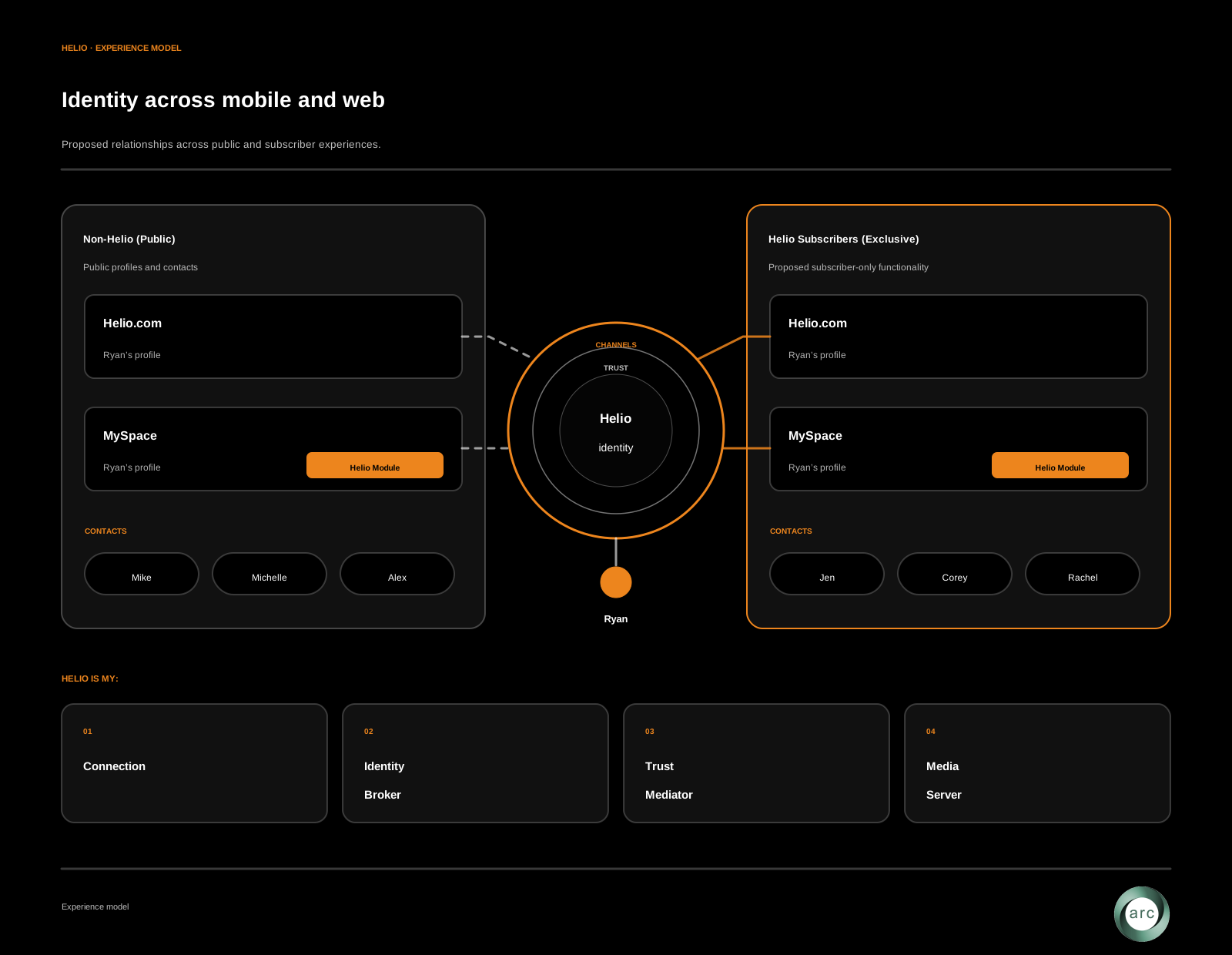
Helio.com profile · MySpace profile · Helio module
Channels and trust connect the person with the service.
Connection · Identity broker · Trust mediator · Media server
Helio.com profile · MySpace profile · Helio module with additional subscriber functions
Bring sharing into understandable device interactions
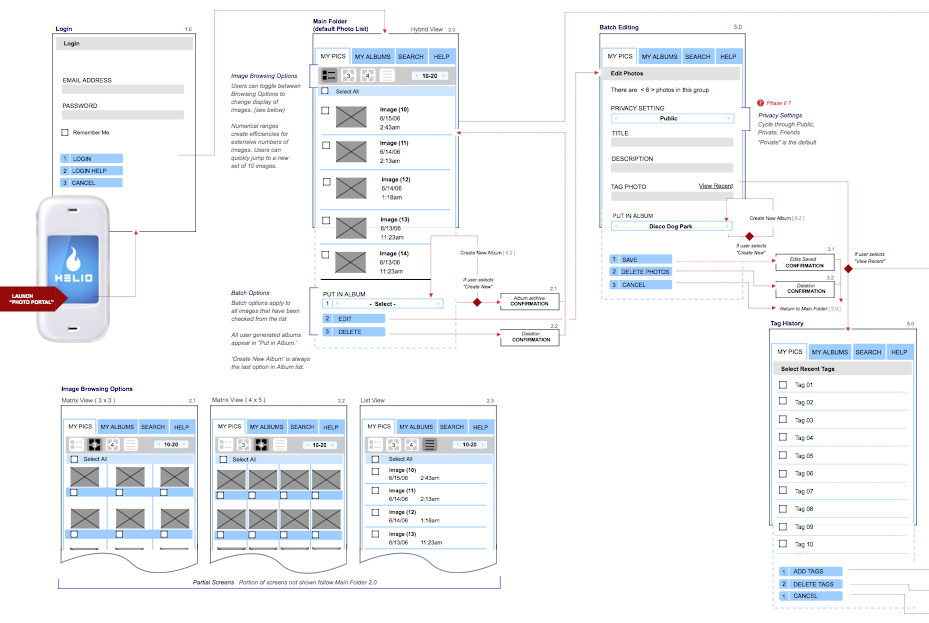
Photo sharing brought the strategy to life. The handset interaction concepts linked sign-in with pictures and albums, then mapped how users would pick an image, edit its details, and organize their collection. Titles, descriptions, tags, and privacy settings stayed close to the content they described.
Sharing a photo meant making choices: what image to use, what to say about it, and who should see it. The flow turned these decisions into a clear sequence. Image and list views offered different ways to see a collection, while editing and organizing brought helpful structure.
My role in mobile strategy was to connect these interactions to the full customer experience. The challenge was to turn a big vision into an interface that new users could easily use. We balanced rich features on handset and web with the need for simplicity. I worked closely with designers and engineers, focusing on what mattered most, streamlining workflows, and giving clear guidance. Keeping things simple meant making the connections between actions clear and the experience consistent as options grew.
This work connected the service model to on-device interactions and turned those actions into interface and interaction ideas. It was an early test of the product judgment I have relied on for more complex platforms since.
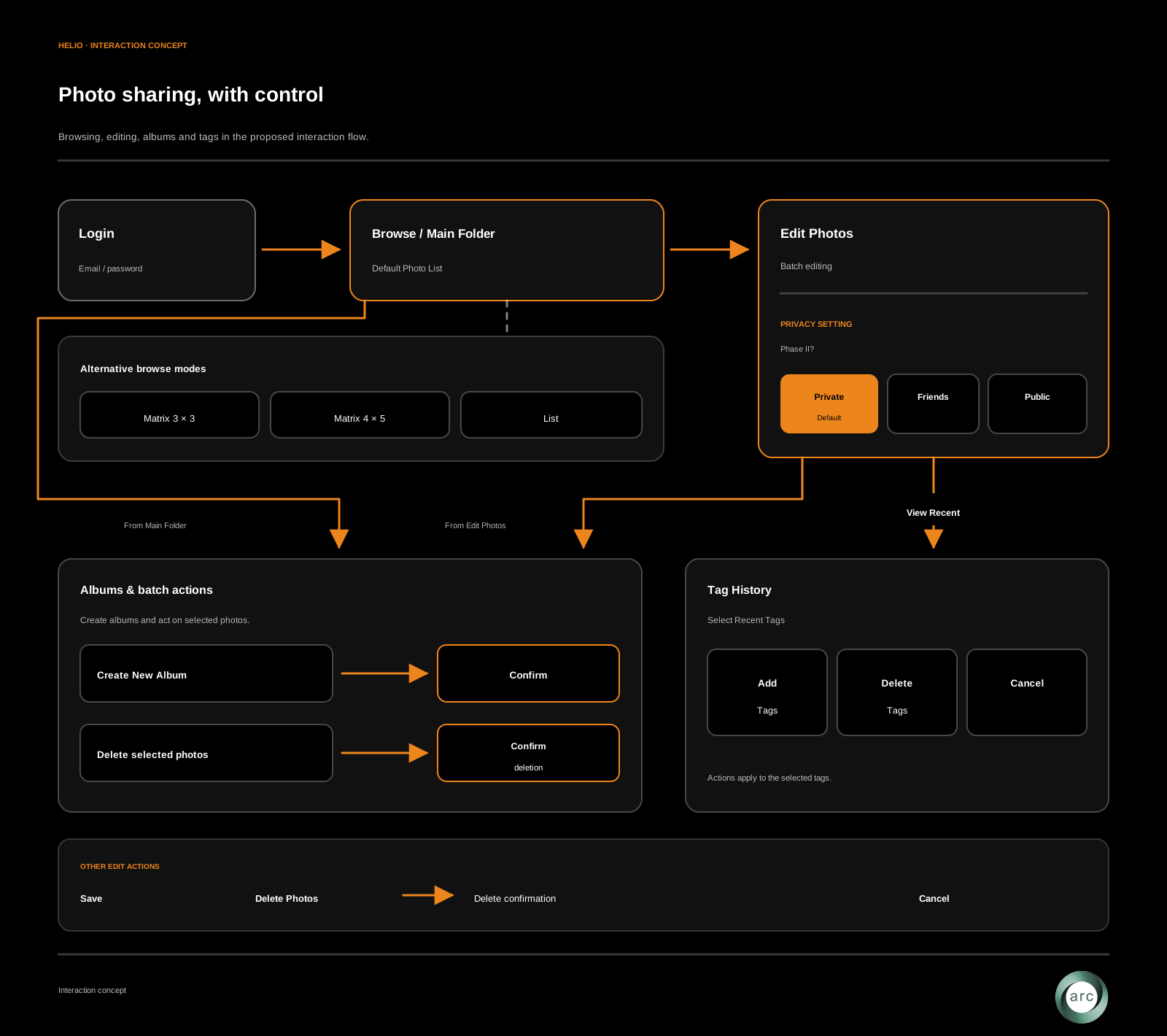
Browse in a 3 × 3 matrix, 4 × 5 matrix or list. Editing brings title, description, tags, album and privacy together.
Albums are available from Browse and Edit. New-album creation and selected-photo deletion have confirmation paths. Recent tags lead to Tag History.
Private is the default. Friends and Public provide alternative visibility settings.
Carry the relationship across mobile and web
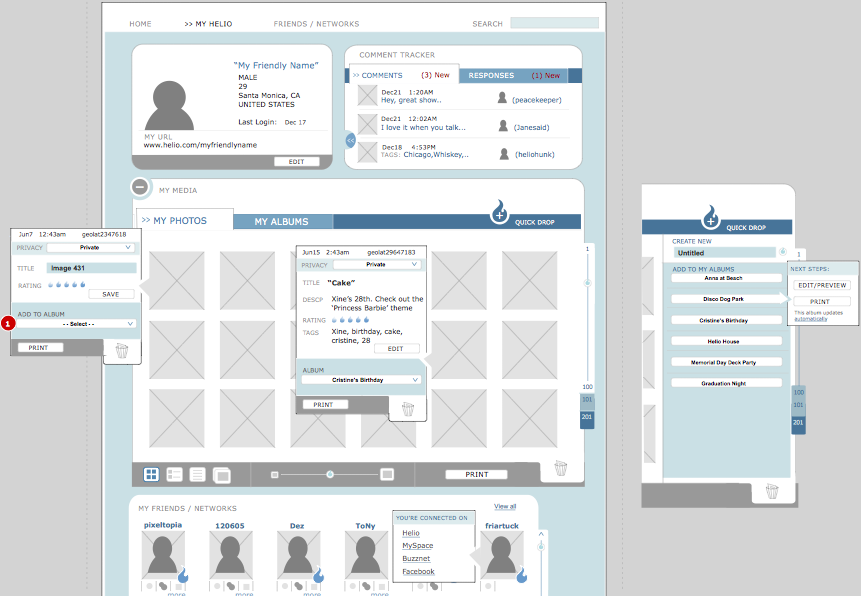
The MyHelio portal concept gave the web a clear purpose. Profile information, media, albums, comments, and connected people all shared one workspace. The concept provided a place to organize content and manage relationships, building on what people did on their handset. The portal and device-flow concepts explored how that continuity could work.
Continuity was the main design challenge. A photo could belong to a person, an album, and a community at the same time. Its meaning depended on these connections. The handset flow and portal concept helped us figure out how identity, organization, and control should move across devices.
I am still proud of this work. It brought together a new kind of social behavior with practical mobile service design and gave me lasting insight into building device-based products. Both the business idea and the daily experience needed careful judgment. In this project, we combined purpose, structure, and detailed interactions.
The main lesson from this project was simple: follow the person through the system. Start with what they want to do, understand the relationships and responsibilities around each action, and make sure every touchpoint supports them. This approach still shapes how I work on product strategy and UX, and it has guided me on more complex platforms since.
Role and collaboration
- Mobile strategy and device UX · Arc Worldwide
- JT Anderson
- UX collaboration
- Parrish Hanna
- Design collaboration
- Arc Worldwide team
- Client collaboration
- Helio