Leo Burnett / Arc Worldwide
Leo Burnett / Arc: Building the digital practice
Creative leadership · Experience architecture · Emerging technology
Rich Media co-founder and Creative Director · Operational Lead, Digital Creative
My partner and I wanted to build a digital practice that turned big creative ideas into real experiences for people. At Leo Burnett, iLeo, and Arc Worldwide, I started in production and creative technology, then moved into creative direction, team building, and operational leadership. As co-founder of Arc’s Rich Media Group, I grew the team from four to 35 people, then shifted into digital creative operations as the agency moved toward account-focused teams.
We worked on projects like exploring a Cadillac, following Army recruits through basic training, finding a cocktail, playing with the Eggo family, and sharing photos from a mobile phone. Each project pushed us to connect a brand’s goals to something meaningful for the person using it.
Build the capability around the idea.
I began with hands-on production. In Digital Creative Solutions, I planned, set up, and taught workflows for the creative team. At iLeo, I moved from senior producer to creative direction and copywriting. This experience shaped how I approached Rich Media: understand the idea, understand the medium, and give the team a practical way to bring them together.
We built a team focused on web content and interaction, with film, animation, Flash development, and product exploration as key skills. One campaign might need a filmmaker. The next might need an interaction designer. Growing the team meant recognizing these specialties and organizing them around what our clients needed.
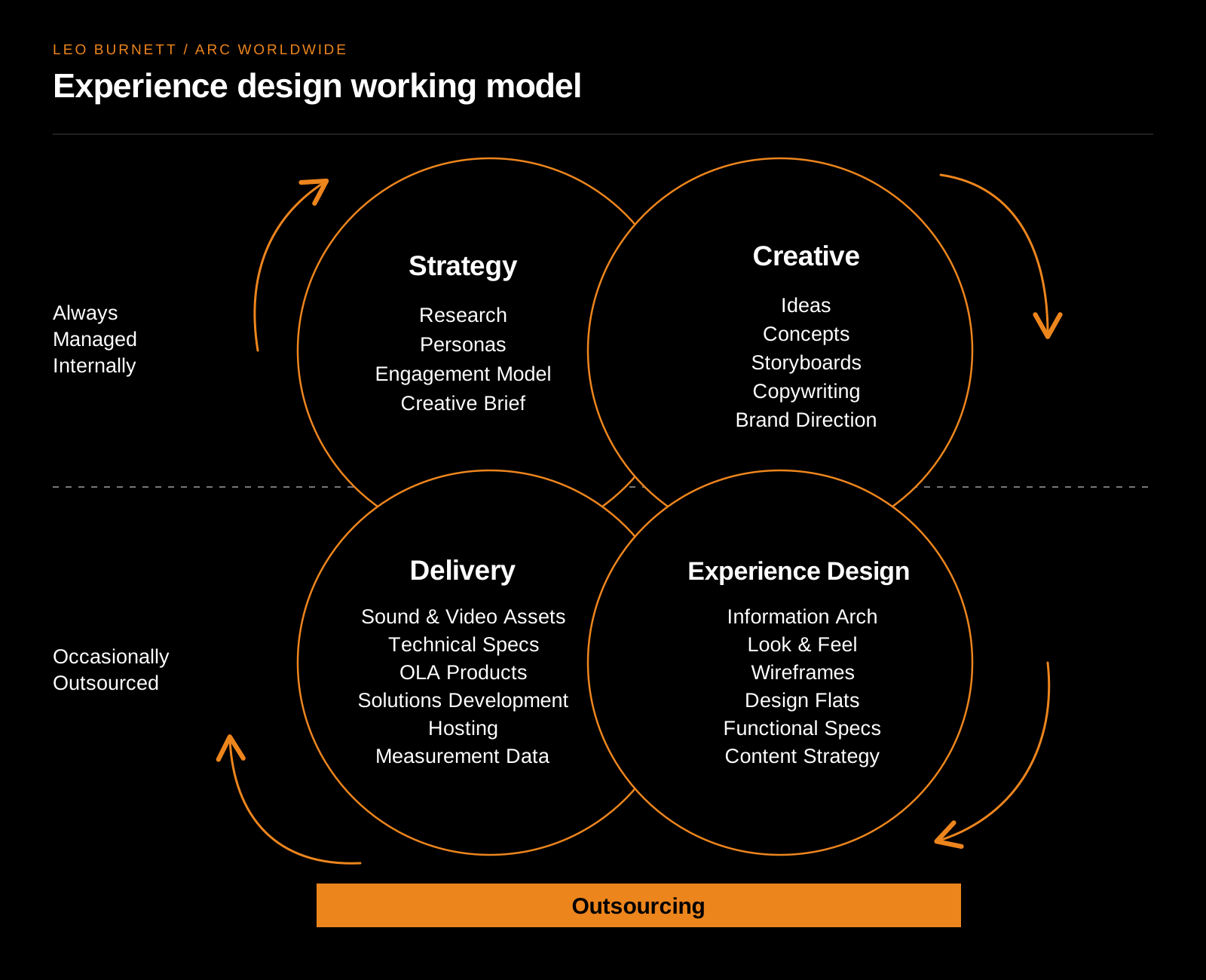
As Arc’s operational lead for digital creative, I reported to the CCO and COO and worked closely with development and project management leaders. Together, we helped the agency move from discipline-based groups to account teams. I focused on guiding that transition across concept, experience design, and delivery.
Give experience design a defined place.
Information architecture became a practical part of our work. Audience goals, content structure, interaction models, wireframes, and prototypes helped teams decide how an idea should work. I worked with experience planners and specialists to bring this understanding into creative reviews and carry it through production.
A transition on Kellogg’s made the organizational questions clear. I worked with a Burnett creative lead to clarify account ownership, define Arc’s Experience Design team’s contributions, and organize creative reviews. I suggested pairing an experience planner with a designer, assigning project management to track requests and changes, and making sure there was enough build time.
Clear roles mattered to the people doing the work. Creative teams needed to own the concept. Experience specialists needed space to develop it. Delivery teams needed decisions they could act on. I also suggested design-director oversight as the structure developed. Clear expectations gave talented people a real reason to work together.
Use the experience to answer real questions.
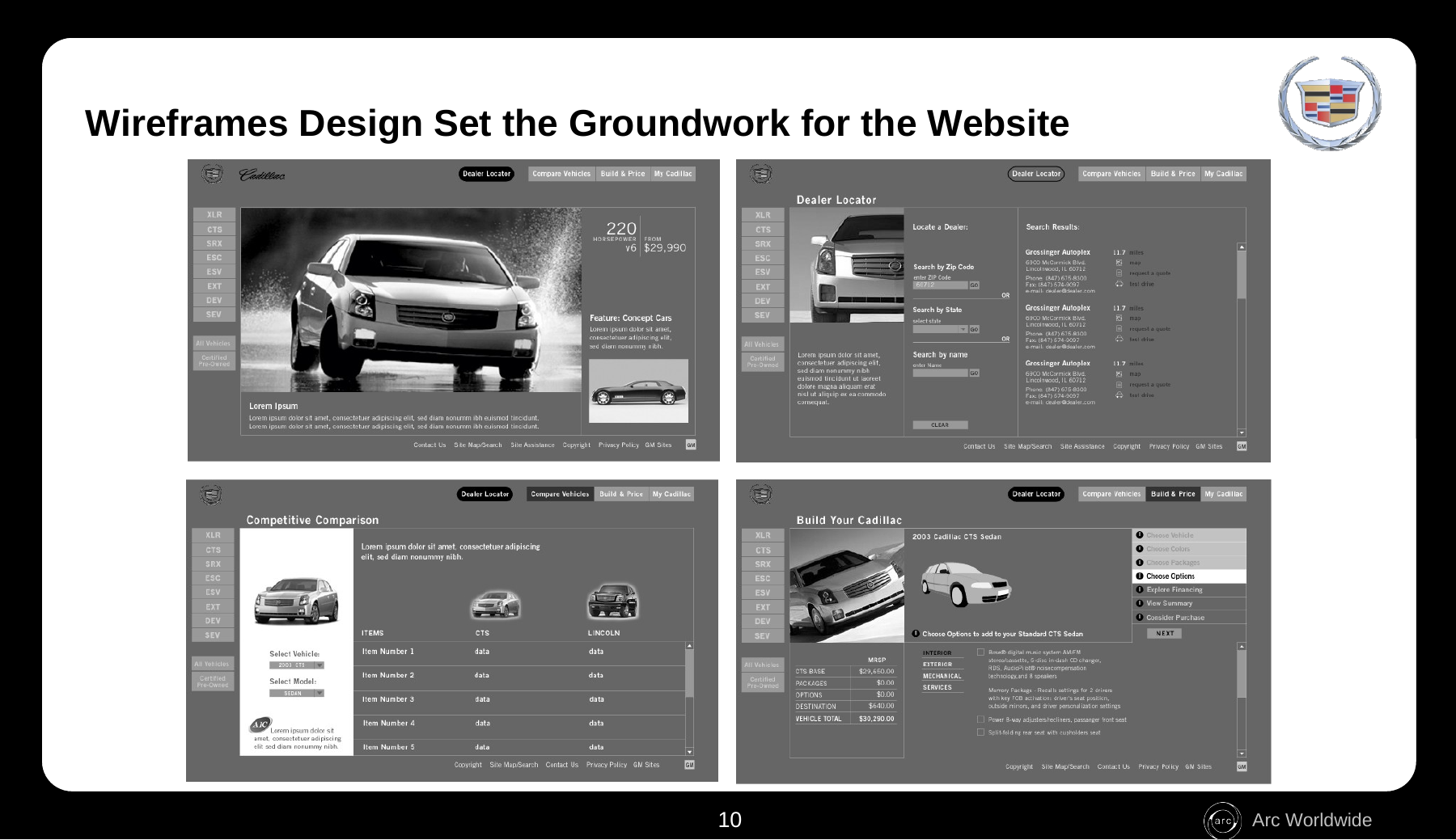
Cadillac was updating its vehicles and brand. The website needed to show that change and help people make a big purchase. I led the digital experience strategy, adding panoramic vehicle exploration, interactive feature explanations, model configuration, comparison tools, and clear paths to dealers or test drives.
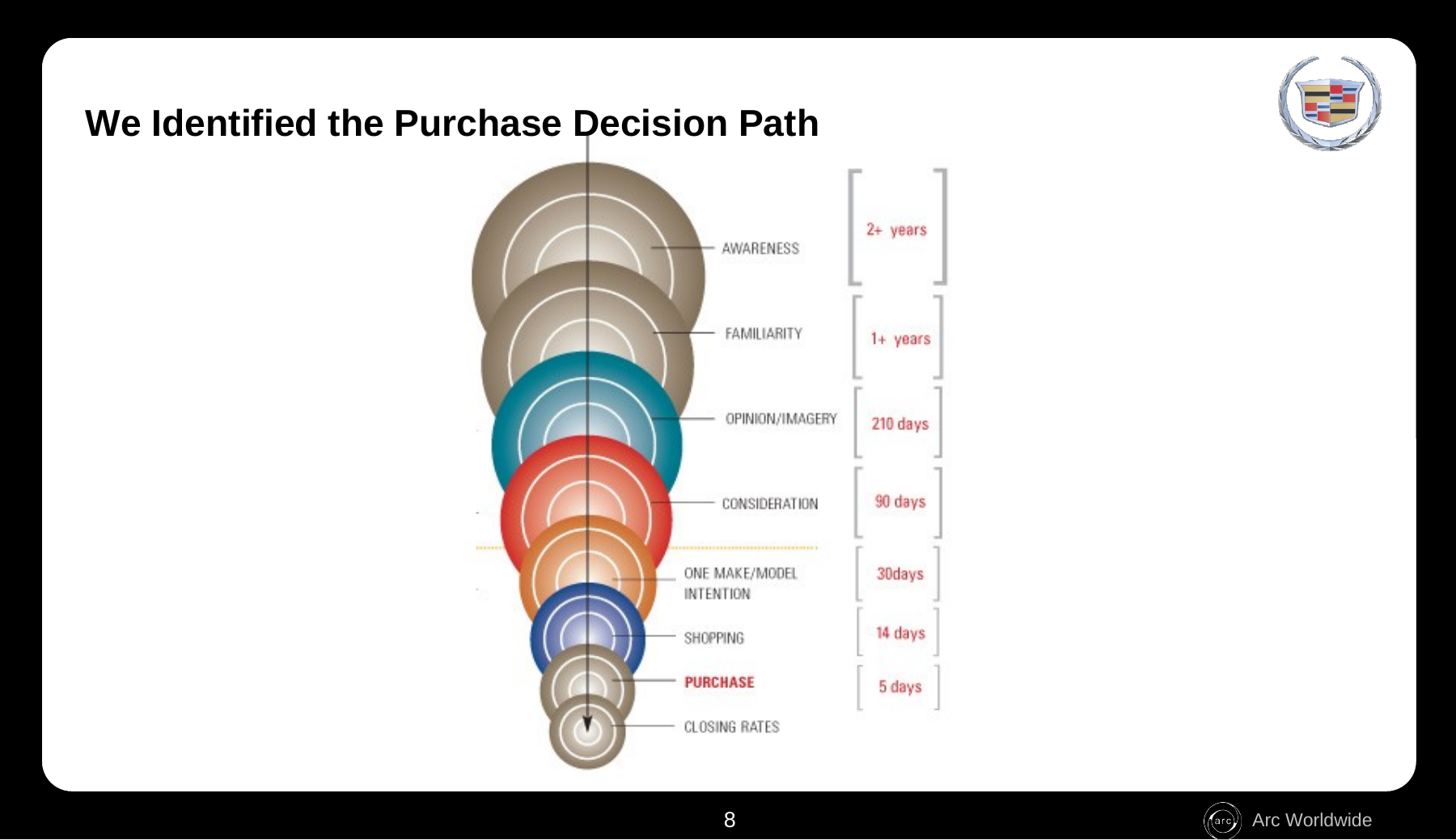
The team’s purchase-decision map linked long-term awareness to the immediate questions people had while shopping. Wireframes put those questions on the page. Product images showed the brand’s design confidence, and the tools helped people explore. Site traffic grew from about 200,000 to nearly one million unique monthly visitors. Prototype testing showed better navigation, clearer information, and improved interaction. These results reflect the larger site effort.
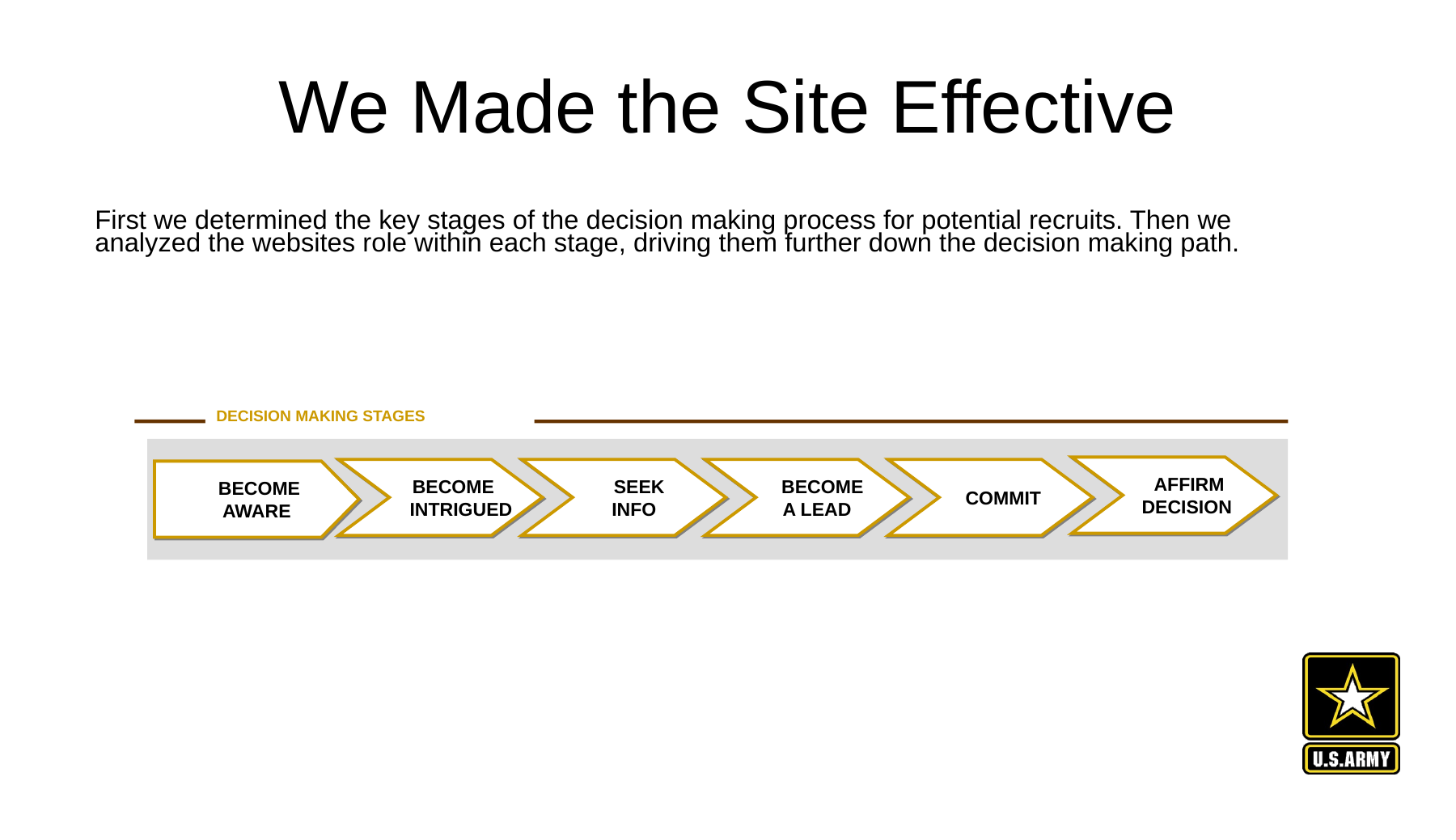
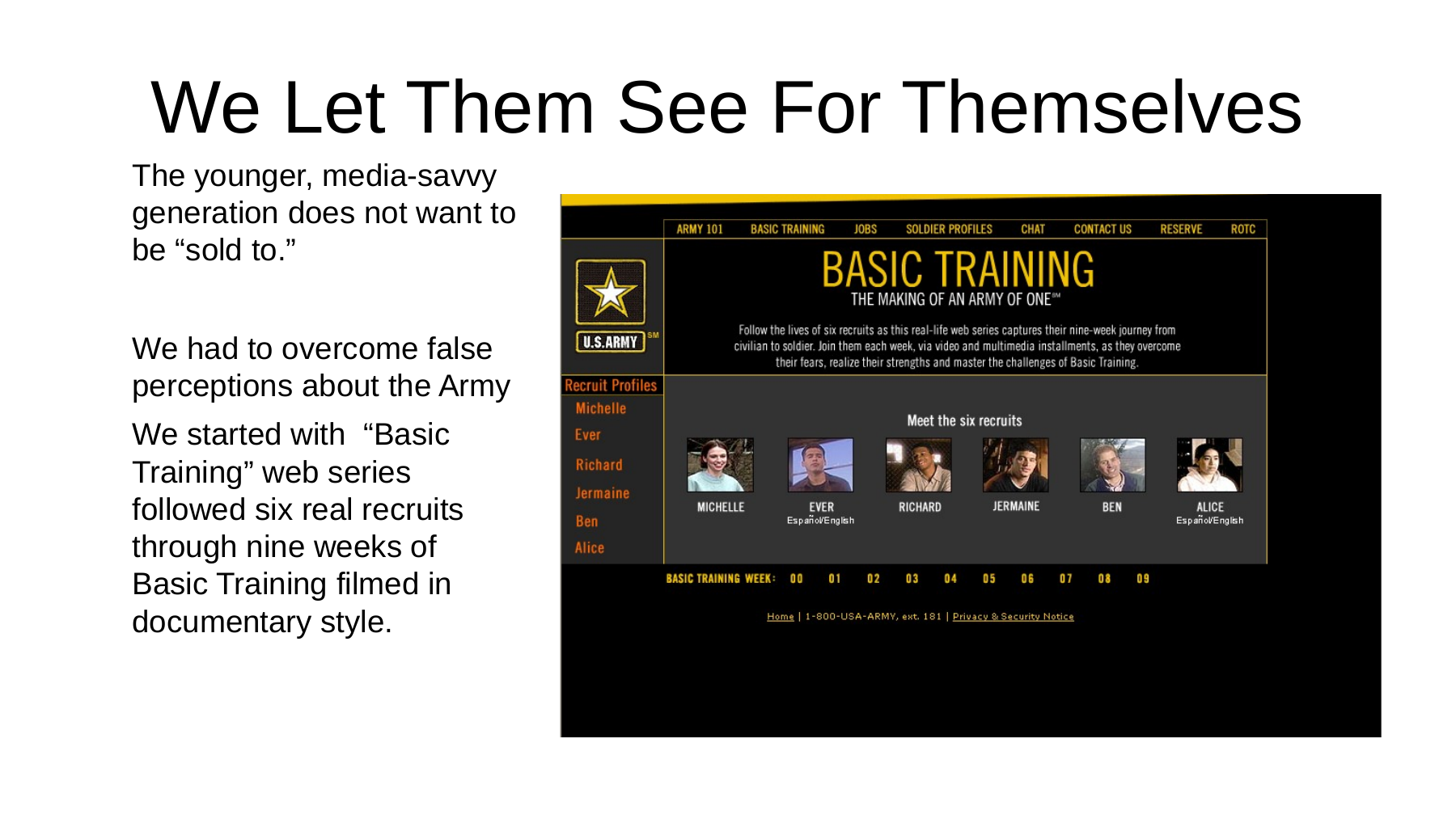
GoArmy needed a different kind of confidence. Potential recruits had questions about Army life, basic training, and their future. I led web production and rich-media content for the recruitment program. The site matched information to each stage of a recruit’s decision and used documentary storytelling to let visitors follow six recruits through nine weeks of basic training.
This approach made the content strategy real: help someone find an answer, then give them a real story they could explore themselves. The website became a hub for a larger program that included advertising, direct communications, events, and recruiters.
Give people a reason to participate.
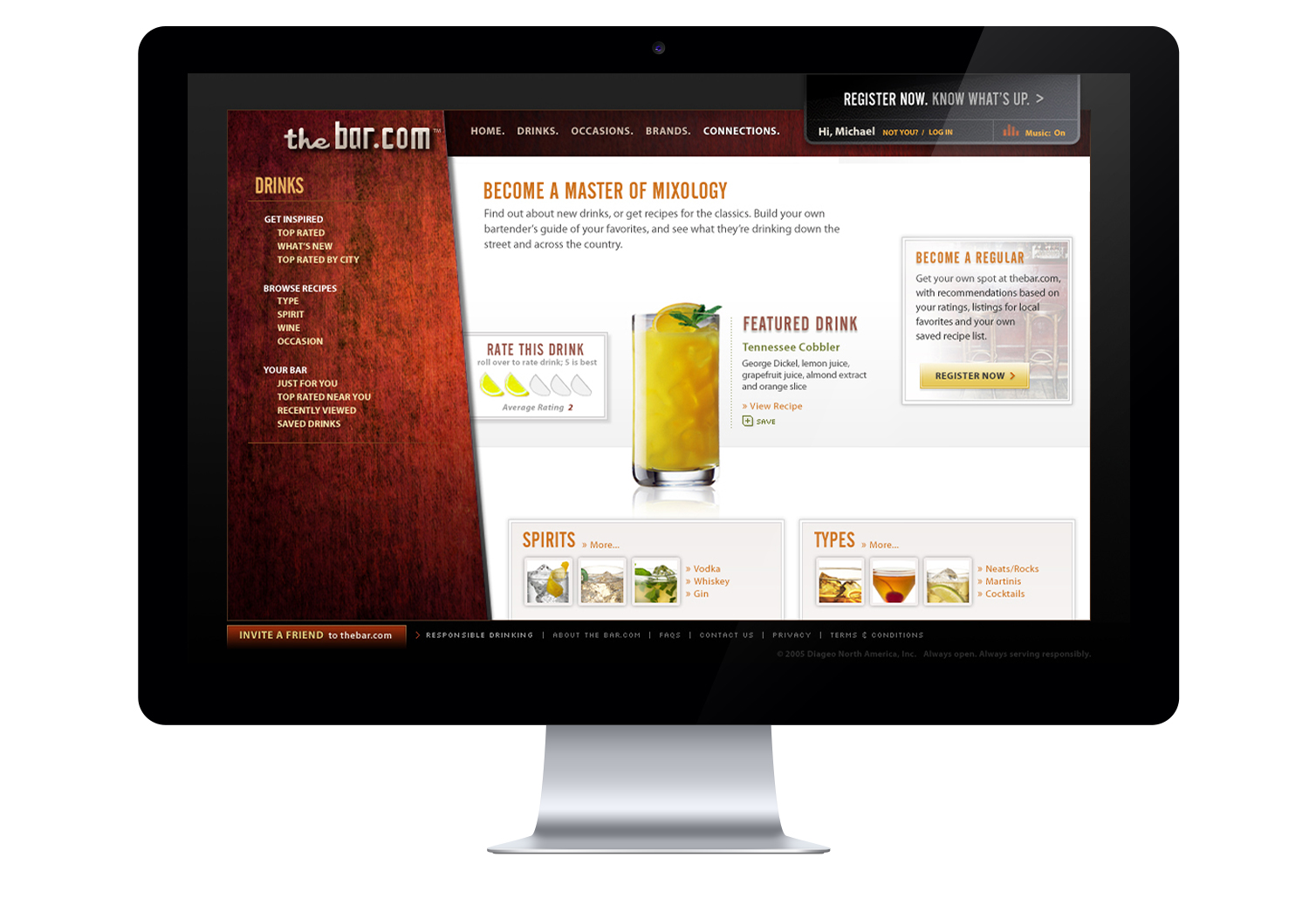
At Diageo’s thebar.com, I co-led digital and brand creative direction. The business wanted to build relationships with consumers across its brands, and we focused on real value: drink discovery, recipes, entertaining stories, and personalized experiences.
Registration was part of the experience. Jack the Bartender welcomed visitors and guided them through it. Returning members could build on what they had already shared. Time spent and repeat visits were higher than Diageo’s goals. The real design question was what the customer got in return for their attention and information.
The details often needed careful judgment across brand, production, and experience. During a Cîroc imagery transition, I suggested a homepage feature using current images while we reviewed changes to an existing film. This proposal gave the client a way to balance brand continuity with cost, timing, and a smooth experience.
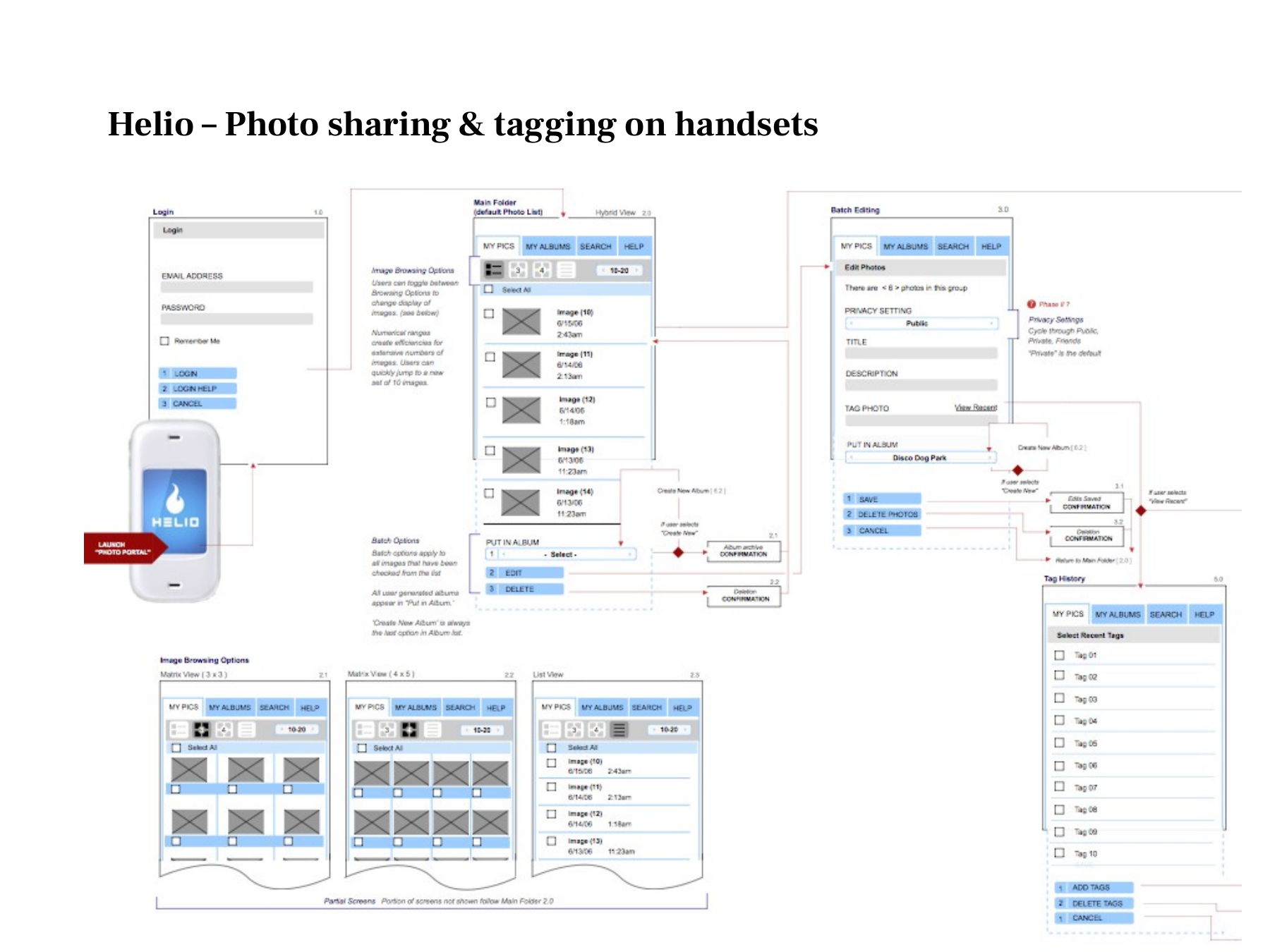
For Helio, I led mobile strategy focused on identity, community, and sharing. We mapped handset apps, web profiles, privacy settings, and photo sharing into one service. The concepts made product questions clear: who could see a photo, how it moved between devices, and what extra value membership could offer.
Let the audience step into the idea.
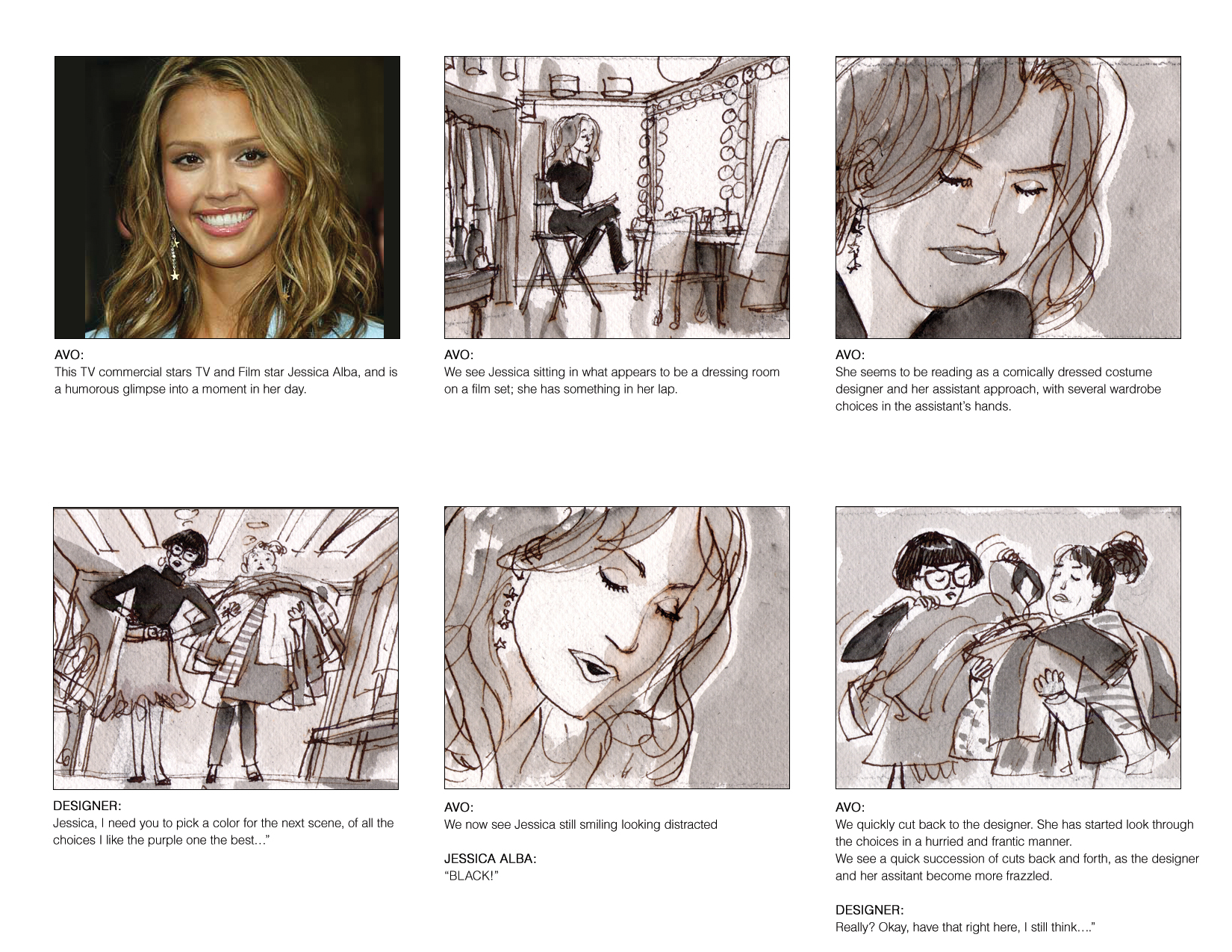
For Nintendo DS, my creative partner and I developed a portable play concept for busy adult women. We built moments of play into daily routines, using easy-to-approach games to show the product’s value. My work included concept development, scripts, and boardomatic materials for review. The Jessica Alba materials show the concept in development.
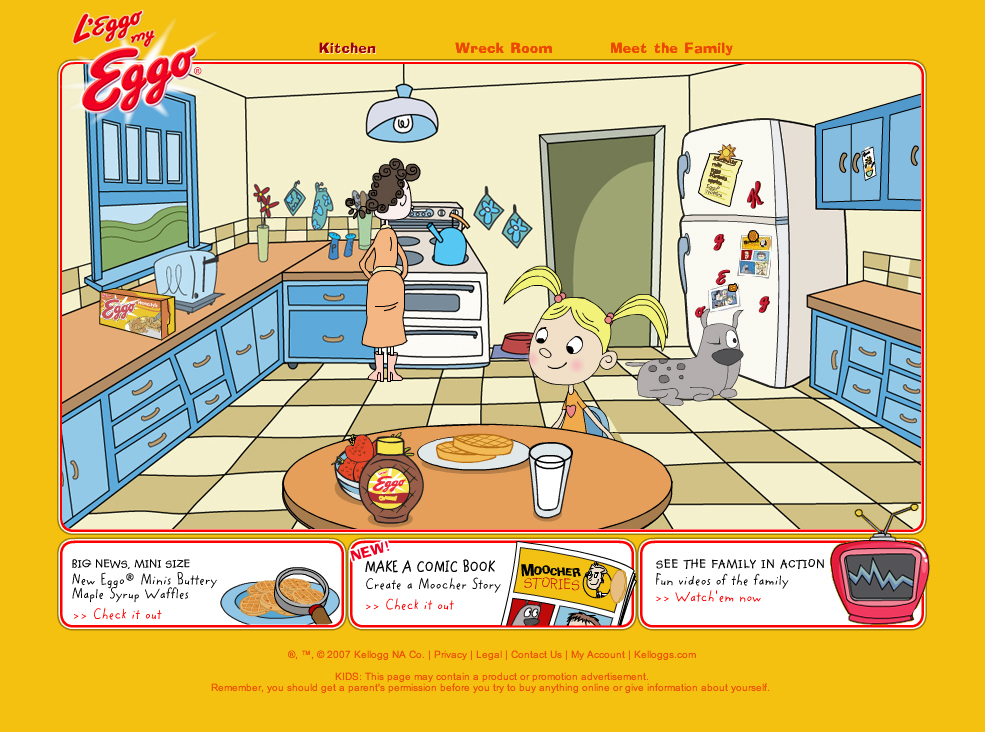
Eggo offered a different kind of play. As creative director, I led the redesign of LeggoMyEggo.com, developed interactive games, and worked on The Great Eggo Chase with Nickelodeon. The Eggo experience showed how the kitchen helped people discover products, the Wreck Room offered games, and the scavenger hunt connected clues, publisher pages, revealed letters, and a clear next step.
The scavenger hunt took the brand world into the publisher’s pages. I worked with creative, production, and media partners on instructions, placement, and technical testing. A player needed to understand a clue, find the right page, reveal a letter, and know the next step. Creative direction was as much about this sequence as about the look of the work.
What I carried forward
This time shaped how I lead: stay close to the creative idea, make the audience’s decisions clear, and build teams that can deliver. I learned to focus on details that support big work: thoughtful content structure, clear review processes, open technical discussions, and matching talent to the right role. These habits still guide how I approach product strategy, design systems, and creative leadership.
Across the work
Leadership across disciplines
Product Management and Marketing
Build a practice that can deliver
I co-founded and helped grow Arc’s Rich Media Group from four to 35 people. I then became operational lead for digital creative, connecting creative direction, experience design, and delivery.
Read the chapterStrategy
Connect participation to customer value.
From Diageo’s registration experience to Helio’s mobile identity and sharing concepts, I helped turn business goals into clear reasons for people to participate.
Read the chapterUX
Make the audience’s decisions visible.
I brought experience planning and information architecture into creative and delivery workflows. Cadillac and GoArmy showed how customer questions shaped content and interaction.
Read the chapterCreative Direction
Give an idea something people can do
My work connected Nintendo concept development and Eggo’s animated brand world through scripts, interactive experiences, and the practical decisions needed to bring the idea across channels.
Read the chapter