Rocket UX Portfolio Integration
Integrating UX, design systems, and research to accelerate innovation and consistency.
As Rocket Companies diversified into mortgages, auto, real estate, and financial products, a unified user experience became critical. Fragmented UX practices and siloed product teams risked inconsistent journeys, duplicative work, and missed learning opportunities. I led the integration of UX across Rocket’s portfolio—building the strategy, systems, and culture needed to deliver a seamless, scalable experience for millions of clients and hundreds of internal stakeholders.
My work began with a comprehensive audit of Rocket’s product landscape, mapping user journeys across web, mobile, and service touchpoints. I identified experience gaps, inconsistencies in brand expression, and opportunities to harmonize design patterns. Collaborating with design, engineering, and product leaders, I guided the development of a cross-vertical design system—standardizing UI components, interactions, and accessibility guidelines that could flex across mortgage, auto, and emerging products.
PORTFOLIO OPERATING MODEL
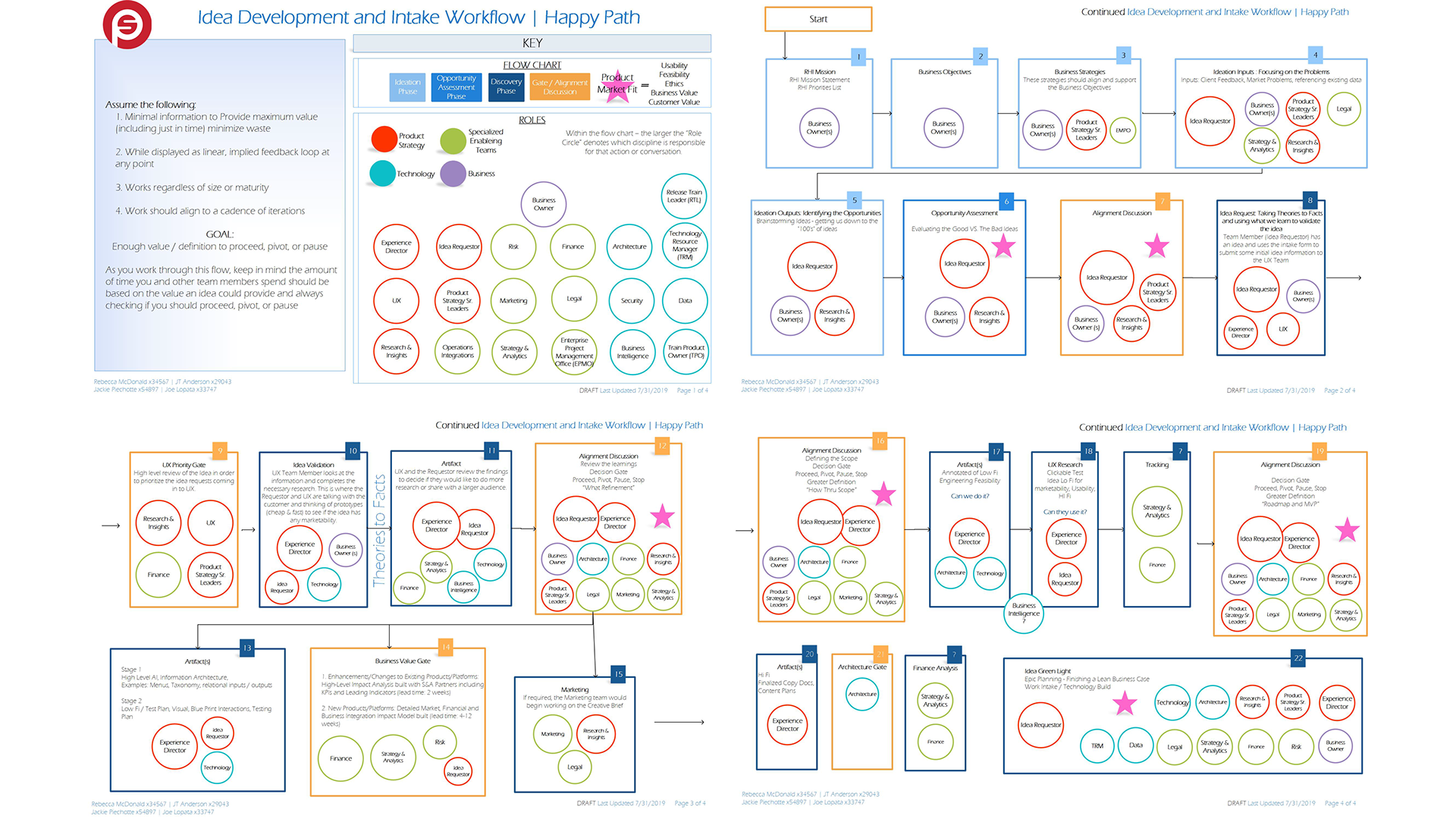
OPERATING MODEL + OUTCOMES
We established a centralized UX research practice, enabling teams to share insights, validate hypotheses, and measure impact at scale. I introduced experience principles rooted in Rocket’s brand values—simplicity, trust, empowerment—to ensure that every team was aligned on what “great” looked like for our clients. This included building a shared design language, content strategy, and documentation portal to accelerate onboarding and reduce design debt.
To support growth, I partnered with operations and IT to implement design ops processes: governance models for component updates, intake systems for new feature requests, and feedback loops connecting customer support with UX teams. We built a community of practice for UX professionals—offering training, critique sessions, and cross-team collaboration to foster a culture of innovation and continuous improvement.
As a result, Rocket achieved greater consistency and efficiency across its digital properties, shortened time-to-market for new features, and improved cross-sell and retention rates. The unified UX approach empowered product teams to focus on differentiated experiences while maintaining the rigor and reliability clients expected from a leading fintech brand. Rocket’s integrated UX portfolio has become a model for enterprise-scale design, supporting the company’s ongoing expansion and leadership in digital financial services.
Led integration of design systems, research, and UX strategy across Rocket’s mortgage, auto, and finance products.
Established shared UX principles, centralized research, and design ops to drive scale and consistency.
Enabled faster innovation, reduced design debt, and improved client experience across the Rocket ecosystem. The result was stronger alignment, reduced delivery friction, and measurable improvements in experience quality and operating efficiency. Teams moved faster with greater confidence, reducing task friction by 22%, increasing engagement by 17%, and accelerating release cycles from six weeks to two.